The Great Wheel of Time
He was from Pisces.
Connected cities and traditions in circulation
During this period, many urban, commercial and religious networks expanded. Aksum, Kilwa, If ⁇ and Mbanza Kongo show different ways to organize urban life and exchanges in Africa. In America, Hopewell, Cahokia, Tiwanaku and Tenochtitlan retained their own traditions of construction and assembly. Pacific sailors established communities in Rapa Nui and Aotearoa; Nan Madol and Tonga show other ways to organize authority between islands. The libraries of Timbuktu and Gutenberg's printing press make it possible to compare ways of transmitting texts. In India, Rāmānuja, Rāmānuja and Madhva developed different interpretations of Vedānta; centuries later, Vivekānanda presented it to new audiences. The Haitian Revolution shows how much colonial orders could be exchanged for the action of those who suffered them. Jacob Roggeveen's Dutch expedition arrived on the island in 1722. The European stories describe the meeting from the perspective of visitors. Images of subsequent expeditions allow us to examine how the island was represented to European audiences.
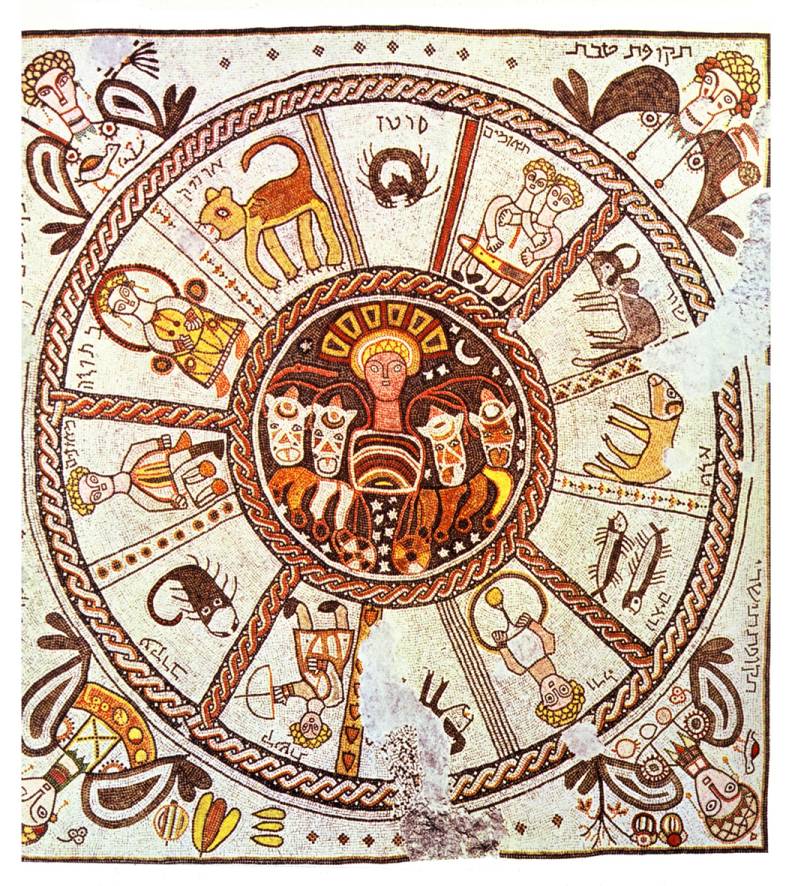
The united fish allow exploring how the images travel and transform. Bet Alpha is a concrete case of a zodiac with Hebrew names in a religious space.
Explore Pisces on the WheelHistorical Chronology
Century I CE; reference date · Eastern Mediterranean and subsequent expansion networksEarly Christian communities build networks of faith and help
Followers of Jesus formed communities in a world marked by Roman rule and different Jewish and Mediterranean traditions. Letters, stories, meetings, and aid practices helped connect groups separated by long distances. Its later history included doctrinal diversity, persecutions and alliances with political powers, as well as a profound influence on arts and calendars.
Historical source · Yale · History and literature of the New Testament
79 CE · Pompeii, Campania, ItalyThe eruption of Vesuvius buried Pompeii
The eruption of Vesuvius covered or damaged buildings, streets and work spaces. The ovens, the inscriptions, the remains of food and the recovered paintings allow us to study how one lived in a Roman city. The excavations also show the differences between homes, workshops and public spaces.
Historical fountain · UNESCO · Vesuvius archaeological areas
First centuries CE · River valleys of Ohio, North AmericaGeometry and meeting at Hopewell enclosures
The indigenous communities that built the Ohio campuses moved land on a large scale and built geometrical complexes. Some axes are related to extreme positions of the Moon. Materials from distant regions allow us to study exchanges and ceremonial meetings.
Historical source · National Park Service · Hopewell ceremonial sites
Centuries I–III CE, Roman urban phase · Volubilis, current MoroccoVolubilis produces oil and grows in North Africa
A city linked to the Roman Empire developed over an earlier settlement. Presses and containers help to rebuild oil production, while houses, mosaics and inscriptions show how the range and local belonging were expressed.
Historical fountain · UNESCO · Volubilis archaeological site
105 CE, traditional date; previous remains exist · China Han and later Eurasian networksPapermaking opens up other paths for texts
The tradition links Cai Lun with improvements in paper making, although there are previous testimonies of this material in China. Preparing fibers, forming leaves and drying them turned vegetable materials into surfaces to write and reproduce images. The technique was gradually disseminated through Asian networks and later through other regions.
Historical source · Académie des Inscriptions · Origins of paper in China
First centuries CE, urban expansion · Cuenca de MéxicoTeotihuacan and the city of housing complexes
The avenue and the pyramids organized monumental spaces. Neighborhoods and residential complexes allow you to study a city populated by communities of different origin, with workshops and long distance links. Urban growth spread for several generations.
Historical source · INAH · Pre-Hispanic City of Teotihuacan
Centuries I–III CE, Caravan boom · Palmira, current SyriaPalmira thrives between the Mediterranean and Mesopotamia
Palmira merchants organized caravans connecting the Syrian desert with Mesopotamia. The inscriptions and monuments show a city where different languages and practices coexisted. The great colonnade articulated streets, public precincts and ceremonial buildings.
Historical fountain · Ministry of Culture of France · Palmira, caravan city
First centuries CE · Northern coast of PeruThe Mochica Workshops and Ceremonial Venues
The adobe sets, painted ceramics and metal workshops allow to study communities linked by regional styles and practices. The Huacas de Moche preserve courtyards and reliefs that show the use of images in ceremonial spaces.
Historical source · The Met · Central and Southern Andes, 1–500 CE
Since c. 250 CE · Mayan lowlandsThe Mayan Classic Era
Various Mayan cities erected monuments with inscriptions, portraits and dates. Calakmul was one of the most important centres in the region. c. 734 CE, death of Jasaw Chan K’awiil I · Tikal, Petén, Guatemala. The temple associated with the burial of Jasaw Chan K’awiil I set in stone the memory of a ruler of the Mayan Classic. The Great Square, surrounded by temples and acropolis, concentrated ceremonies and monuments. The set allows linking architecture with the dynastic history of the city.
Historical source · UNESCO
Fourth century CE · Highlands of Ethiopia and EritreaAksum between the Red Sea and the African interior
Aksum's stelae, inscriptions, and coins show a kingdom connected to the Red Sea routes. Ezana broadcasts allow us to study changes in the real representation and adoption of Christianity. Currency and inscriptions add data to monumental evidence.
Historical source · Mission archeologique française · Kingdom of Aksum
First centuries CE, dating discussed · Indian subcontinentThe Brahmasūtra organize a debate
Aphorisms attributed to Bādarāya ⁇ a order issues arising from the reading of the Upani ⁇ ads. Its brief form gave rise to extensive comments. Read together with the Upaniads and the Bhagavadgītā, they offer a common textual basis for Vedantic schools that differ on soul, world and ultimate reality.
Historical source · Stanford Encyclopedia of Philosophy ·
First millennium CE, rise of the funeral statuary · Alto Magdalena, Huila, ColombiaSt. Augustine carved stone guards next to their tombs
Funeral monuments with human figures, animals and composite beings were erected in the high Magdalena. Their disposition along with cameras and mounds helps to study how links with the dead became visible. The interpretations of his figures remain open.
Historical fountain · ICANH · San Agustín archaeological park
Since the end of the 4th century A.D. C., early stages · Dunhuang, Gansu, ChinaThe caves of Mogao gather art and texts in Dunhuang
Donors and Buddhist communities financed shrines excavated along an oasis of silk routes. His paintings and sculptures document changes of style for centuries. The sealed library of a cave kept manuscripts in several languages that expand the record of religious and social life.
Historical source · International Dunhuang Programme · Dunhuang Buddhist Caves
Since c. 500 CE, expansion phase · Altiplano del Titicaca, current BoliviaTiwanaku and life on the highlands
Tiwanaku gathered squares, monumental enclosures and stone sculptures. Agriculture, caravans and regional networks maintained different forms of occupation of the highlands. Tiwanacot styles circulated beyond the city and changed according to place.
Historical source · UNESCO · Tiwanaku
Sixth century CE · Beth Alpha, GalileeA Zodiac on the floor of a synagogue
The mosaic of Beth Alpha brings together a zodiac circle, signs with Hebrew names and a solar figure in the center. The panel is part of a wider program with Jewish scenes and motifs. It is a concrete example of how a community incorporated zodiac images into a religious space.
Historical source · Israel Nature and Parks Authority
622 CE, hegira; expansion over the following centuries · Arabia and subsequent Afro-Eurasia networksThe Hegira opens a new community and a reference of time
The emigration of Muhammad and his followers from Mecca to Medina became the starting point of the Islamic calendar. The subsequent expansion of Islam brought together diverse forms of community, study and government. Pilgrimages, commerce and education connected regions of Africa, Asia and Europe without erasing their cultural differences.
Historical source · The Met · Nature of Islamic art
628 CE, reference work · India and subsequent translation networksZero enters into the rules of arithmetic
Brahmagupta formulated rules to operate with zero and positive and negative amounts. Zero as a number should be distinguished from signs used as empty spaces in previous positional systems. The transmission of Indian decimal numbering through Arabic language scholars and then to Europe transformed the practices of calculation.
Historical source · University of St Andrews · Brahmagupta
c. 600–1000 CE · Ayacucho and other regions of PeruWari, regional centres and objects in circulation
Walled sites and regional centers show ways to coordinate work through different landscapes. The motifs present in textiles and ceramics allow the movement of goods and styles to be monitored. Relations between the capital and each region had their own modalities.
Historical source · The Met · Wari Imperial Art
Centuries VII–VIII CE; approximate dating · China Tang; manuscript preserved in DunhuangA celestial letter from Dunhuang organizes the sky on maps
A scroll found in Dunhuang retains a detailed representation of stars and celestial groupings of Chinese tradition. Its sections allow us to examine how the firmament was divided and described. Comparison with other cartographies shows that observing shared stars did not involve building the same constellations or giving them identical meanings.
Historical source · International Dunhuang Programme · Star chart
8th century CE, approximate date · Indian subcontinentThe Advaita Vedānta
He wrote commentaries to Vedic and Vedantic texts. In its formulation of non-duality, the knowledge of Brahman allows us to understand the profound identity of self. His arguments about ordinary experience and ignorance fueled later debates and teaching traditions.
Historical source · Stanford Encyclopedia of Philosophy ·
Centuries VIII–IX CE · Borobudur, Java, IndonesiaThe musicians carved in Borobudur
Reliefs from the Buddhist temple show sets with drums, flutes and string instruments. These scenes show what was played and in what environments, and provide early testimonies to study the history that leads to Javanese traditions such as gamelan.
Historical source · UNESCO · Music in Borobudur
Centuries VIII–X; reference date · Baghdad and networks of the Islamic worldTranslate and discuss transforms the sciences into Arabic
Translators and scholars put in dialogue Greek, Persian and Indian works with new research. The translations were not simple copies: they required comparing terms, correcting results, and making comments and own methods. Medicine, mathematics and astronomy circulated through books, patronage and encounters between people of different languages and religions.
Historical source · UNESCO · Astronomy and Silk Roads
836–892 CE, Caliphal headquarters · Samarra, Tigris Valley, IraqSamarra becomes Abbasi capital
The caliph al-Müta-im moved the court to the medium Tigris. Palaces, barracks, hippodromes and mosques spread across a wide strip by the river. The architecture and carved stucco show the scale of the court and the circulation of decorative models in the Abasi world.
Historical Fountain · UNESCO · Archaeological City of Samarra
868 CE · China; specimen preserved in DunhuangThe Diamond Sutra unites impression, image and circulation of knowledge
A roll dated in 868 combines text and image printed with wooden blocks. His dedication alludes to free distribution, uniting religious merit and reproduction of writings. The copy documents an Asian printing tradition that expanded the circulation of texts and images many centuries before the European mobile printing press.
Historical source · International Dunhuang Programme · Diamond Sutra
Since c. 850 CE, development of large houses · Chaco Canyon, New Mexico, United StatesPueblo Bonito and the Chaco Canyon Networks
Pueblo Bonito grew through successive enlargements to gather hundreds of rooms and ceremonial spaces. Timber and goods moved from other regions reveal an extensive network of collaboration and exchange. For today's village communities, the canyon maintains living historical ties.
Historical source · National Park Service · Pueblo Bonito
c. centuries X–XII CE, monumental expansion · Chichen Itza, Yucatán, MexicoChichen Itza gathers squares, cenotes and ball games
Monumental architecture organized processions, meetings and ritual practices near natural water sources. The reliefs of the Ball Game and the buildings of the large square allow to study the authority and circulation of styles in Mesoamerica. The political history of these exchanges continues to be discussed.
Historical source · INAH · Chichen Itza archaeological zone
Since c. 11th century CE · Swahili Coast, current TanzaniaKilwa Kisiwani and Indian trade
Goods such as gold and ivory came from Kilwa and ceramics and other imports arrived. Coralstone buildings, the Great Mosque and port structures record the development of a Swahili urban society linked to routes that communicated Africa, Arabia and Asia.
Historical source · UNESCO · Kilwa Kisiwani and Songo Mnara
c. centuries VIII–XIII CE, sites of the region · Madagascar and Mozambique CanalAsian crops in the West Indian Ocean
Charified remains of rice, mung beans and other Asian crops contrast with the set of plants in many continental African sites. The seeds, along with linguistic evidence, document Austrian maritime connections and help understand how communities were formed with African and Asian contributions.
Historical source · Crowther and collaborators · PNAS
Since the 10th century AD. C., development of the capital Chimu · Chan Chan, northern coast of PeruChan Chan organizes a land capital
The capital Chimou built large adobe enclosures with patios, storage areas and sea-moment reliefs. Its space organization helps to study resource control and specialized work in a desert environment connected to the sea.
Historical Fountain · UNESCO · Chan Chan Archaeological Area
c. 1010 CE · Iran and Persian cultural fieldThe Shāhnāmeh gathers Iran’s epic memory
Ferdousí completed an extensive poem that covers kings, heroes and conflicts from a mythical past to the Arab conquest. His transmission maintained a shared repertoire of stories in Persian. The illustrated manuscripts of later centuries added new visual readings and turned the epic into a meeting between poetry, calligraphy and painting.
Historical source · The Met · Shah Tahmasp's Shāhnāmeh
1021 CE · Newfoundland, North AmericaNordic presence in Newfoundland
A study dated wood cut with metal tools in L’Anse aux Meadows. The rings record a solar signal that allowed the cut to be assigned to the year 1021.
Historical source · Kuitems and collaborators · Nature
c. 1 025 CE · Arezzo, Italic PeninsulaGuido de Arezzo and reading written melodies
Guido systematized the use of lines to fix heights and used syllables to teach to chant intervals. Reading more precise heights facilitated learning unknown repertoires without listening to them first. This pedagogy influenced the further development of Western musical notation.
Historical source · British Library · Manuscript Add MS 17808
Around 1050 CE, rapid growth phase · Mississippi Valley, current IllinoisCahokia and the growth of a land city
Cahokia expanded with squares, houses and mounds of land, including the large mound known as Monks Mound. Excavations make it possible to study the coordination of work, food production and ceremonial life in the Mississippi environment.
Historical source · UNESCO · Cahokia mounds
Centuries XI–XIII CE, monumental boom · Bagan, Irawadi Valley, MyanmarBagan builds temples and stupas on the shores of Irawadi
Rulers, nobles, and others financed temples, stupas, and brick monasteries. The ensemble retains inscriptions, murals and sculptures that allow tracking Buddhist donations and practices. The distribution of the buildings reveals the scale of the old capital and its surroundings.
Historical source · UNESCO · Bagan
XI–XIII centuries; beginning as a reference · South IndiaRāmānuja, Madhva and Vedānta diversity
In the Viśi ⁇ dvaita, Rāmānuja defends the unity of Brahman and the reality of souls and the world, which depend on him. His comments, his attention to devotion, and the South Indian context of the śrīvai ⁇ ava show a different answer to the questions that also read śaīkara. 13th century CE · Karnataka, southwestern coast of India. Madhva argued that the difference between Viʹu, souls and the world is real. His texts propose a dualist reading of sources that other schools interpret in terms of non-duality. Udupi became an important center of the mādhva tradition.
Historical source · Internet Encyclopedia of Philosophy · Rāmānuja
Centuries XI–XV CE · Current Zimbabwe TableGreat Zimbabwe and dry stone architecture
Their stone enclosures were lifted without mortar. The distribution of imported buildings, objects and goods makes it possible to study a regional capital with exchange networks that reached the Indian coast. The evidence documents the work of African communities in the region.
Historical source · UNESCO · Greater Zimbabwe
Centuries XII–XV CE, approximate range · Ilé-If ⁇ , current NigeriaTerracotta and brass workshops in If ⁇
If ⁇ artists worked terracotta and metals with specialized techniques. Heads and figures show differences in scale, detail and possible function. The objects are part of an urban and ritual Yoruba history that continues in the region.
Historical source · The Met · Chronology of the Guinean coast
Late 11th century CE, reference piece · Tamil Nadu, southern IndiaThe chola bronzes represent the universe in a dance
The figure of Shiva as Nataraja gathers creation, conservation and destruction in a composition of movement and balance. The bronzes of the chola field were part of cult practices and processions. The image links sculpture, dance and cyclical conceptions of time, a particularly suggestive relationship to travel this wheel.
Historical source · The Met · Shiva as lord of dance
First half of the 12th century CE · Angkor, CambodiaAngkor Wat and Khmer City
Suryavarman II promoted a large temple originally dedicated to Viahu, integrated into the urban region of Angkor. The reliefs collect epic and ritual scenes, while the water infrastructure helps to study the territorial organization that supported the capital.
Historical source · APSARA National Authority · Angkor Wat
End of the 12th–13th century CE · Plateau from Colorado, North AmericaAncient village houses in Mesa Verde
Ancient communities built masonry sets under rocky rock shelters. Homes, warehouses and kivas show room spaces, work and meeting. The descendants peoples maintain historical and cultural ties with these places.
Historical source · National Park Service · Cliff Palace
Around the 13th century CE, approximate date · Rapa Nui, Eastern PolynesiaThe Polynesian settlement of Rapa Nui
Polynesian navigators settled on the island and developed agricultural and maritime practices adapted to their conditions. The chronology is reconstructed with archaeological remains and genetic evidence. The precise dates and routes of the first trips are still discussed. A study of ancient genomes found evidence of contact with populations in America prior to the European arrival.
Historical source · Nature · Ancient towns of Rapa Nui
c. 1200–1500 CE, monumental phase · Pohnpei, MicronesiaNan Madol, a city between canals
On artificial islets were built walls with large basalt pieces and filled with coral. The canals communicated residential, funeral and ceremonial enclosures. The set allows to study how the Saudeleur dynasty organized resources and authority in Pohnpei.
Historical source · UNESCO · Nan Madol
Centuries XII–XIII CE, approximate chronology · Ethiopian HighlandsChurches excavated on the rock in Lalibela
The churches were excavated in rock and connected by passages and courtyards. The layout of the buildings organizes cult tours. The place remains a living center of the Ethiopian Orthodox Christian tradition.
Historical source · UNESCO · Lalibela rock churches
c. 1 220–1 300 CE · Limpopo Valley, South AfricaMapungubwe concentrates authority and trade on Limpopo
The summit housed elite residences and burials, while other sectors occupied the slopes and lowlands. Glass beads and gold objects connect the local organization with commercial networks that reached the Indian Ocean. The gold rhinoceros coming from the site is one of its best known pieces.
Historical Fountain · UNESCO · Mapungubwe Cultural Landscape
Centuries XIII–XIV CE, approximate dating · Tongatapu, TongaMonuments and authority in the Kingdom of Tonga
The Ha’amonga Maui trilith and the Lapaha stepped tombs show different forms of monumental construction. These places relate to the history of the Tui Tonga and to the ability to mobilize work and resources in a kingdom connected by sea.
Historical source · UNESCO · Lapaha, former capital of Tonga
End of the 13th century CE, approximate date · Te Pokohiwi-o-Kupe, Aotearoa New ZealandThe first Maori settlements in Wairau Bar
The burials, tools and food remains preserved in Te Pokohiwi document an early phase of the Polynesian settlement of Aotearoa. The site has a special relationship with Rangitāne or Wairau, whose links and responsibilities are part of the current way of studying the site.
Historical source · Marlborough Museum · Te Pokohiwi-o-Kupe
For several centuries, since the pre-European era · Rapa Nui, Eastern PolynesiaCantera, moai and ceremonial platforms
Rano Raraku preserves sculptures in different stages of carving. Some Moai were moved to stone platforms called ahu. The landscape documents the coordination of those who carved, transported and erected the figures, as well as the relationship between ceremonial spaces and communities.
Historical fountain · UNESCO · Rapa Nui National Park
14th century CE, traditional founding date · Cuenca de MéxicoMexico-Tenochtitlan on the Lake
The Mexican city articulated roads, canals and spaces for cultivation and commerce. Excavations of the Major Temple show successive enlargements and offerings from various regions. The founding date belongs to a historical tradition and the archaeological record documents stages of growth.
Historical source · INAH · Temple Major
Since 1347 in the Mediterranean; Eurasian pandemic · Eurasian and North AfricaBlack plague alters communities, work and beliefs
The spread of the plague led to extraordinary mortality and disorganised households and production and trade networks. Its consequences varied between regions and social groups. Burials, documents, and pathogen studies help investigate how communities faced losses, sought explanations, and reorganized their lives.
Historical source · Spyrou and collaborators · Nature
1377 CE; previous Chinese and Korean precedents · Cheongju, KoreaJikji testifies to printing with moving metal types
The preserved volume of Jikji documents printing with metal types in Korea before Gutenberg. The technique had an Asian background, including the ceramic types associated with Bi Sheng in China. Funding, sorting and reusing characters offered an alternative to carving a whole page in wood; both practices coexisted.
Historical source · UNESCO · Jikji nomination
Centuries XV–XVI CE, study centres boom · Timbuktu, current MaliLibraries, teaching and manuscript networks in Timbuktu
The city connected Sahelian and Transaharian routes. Family collections and teacher networks kept manuscripts on law, religion and other subjects. The transmission of knowledge depended on practices of copying, teaching and circulation between cities.
Historical source · Library of Congress · Islamic Manuscripts of Mali
15th century; tables completed around 1437 · Samarkand, current UzbekistanThe Ulugh Beg Observatory refines stellar tables and positions
Samarkand astronomers gathered observations and calculations with large instruments. The tables associated with Ulugh Beg allowed comparison of stellar positions and astronomical parameters with previous works. Its circulation shows a tradition of measurement and revision connected with other centres in the Islamic world and Asia.
Historical source · University of Michigan · Ulugh Beg Tables
15th century CE · Southern Andes, current PeruBuild and grow in Machu Picchu
The Inca builders integrated terraces, canals, enclosures and roads on a mountain slope. The retaining walls and water management show the sustained work that made the site habitable.
Historical source · UNESCO
Since the 15th century AD. C., court expansion · Benin City, current NigeriaThe Court of the Kingdom of Benin and its Workshops
Artists organized in workshops produced plaques, heads and other objects for the oba court. The images record titles, ceremonies and relations with visitors and traders. The works allow us to study the authority and dynastic memory of the kingdom.
Historical source · The Met · Court of Benin
c. 1 455 CE · Mainz, Central EuropeGutenberg’s Printed Bible
Gutenberg’s mobile metal printing press produced copies of a Latin Bible from the same typographical composition. Its pages retain features of the manuscript book, including the hand-added decoration. There were previous printing traditions in East Asia.
Historical source · Library of Congress · Gutenberg Bible
End of 15th century CE · Congo Basin and North of Current AngolaMbanza Kongo and Atlantic exchanges
The capital of the Kingdom of Kongo concentrated political and ritual functions. Contacts with Portugal expanded the diplomatic exchange and resulted in local uses of Christianity. The ruins and objects preserved document these transformations from different perspectives.
Historical source · UNESCO · Mbanza Kongo
Since 1492; long term exchanges · America, Europe, Africa and subsequent global networksColumbian exchange transforms diets and ecosystems
Plants, animals and microorganisms crossed the Atlantic in networks created by colonial expansion. Maize, potato and other American crops came to new regions, while changing landscapes and ways of feeding in both directions. Epidemics, forced labour and dispossession made this process a profoundly unequal transformation.
Historical Source · Library of Congress · Worlds in Encounter
1504 CE · Florence, ItalyMichelangelo's David occupies the civic space
The monumental sculpture of a biblical hero was installed in front of the Florentine government palace. His body and attitude acquired political resonances in the republic. The episode shows how a work commissioned for a religious context could also become a public image of identity and authority.
Historical source · Galleria dell’Accademia · David
1521 as reference; conquest and colonization for several centuries · Mesoamerica and later colonized territoriesThe conquest of Mexico transforms the American order
The fall of Mexico-Tenochtitlan resulted from a war involving Spanish forces and numerous indigenous allies, in a context of epidemics and political conflicts. Colonization reorganized land, tributes, works and religious practices. Indigenous peoples resisted, negotiated and maintained their own ways of life; their history continued beyond military conquest.
Historical source · Library of Congress · 1492: An Ongoing Voyage
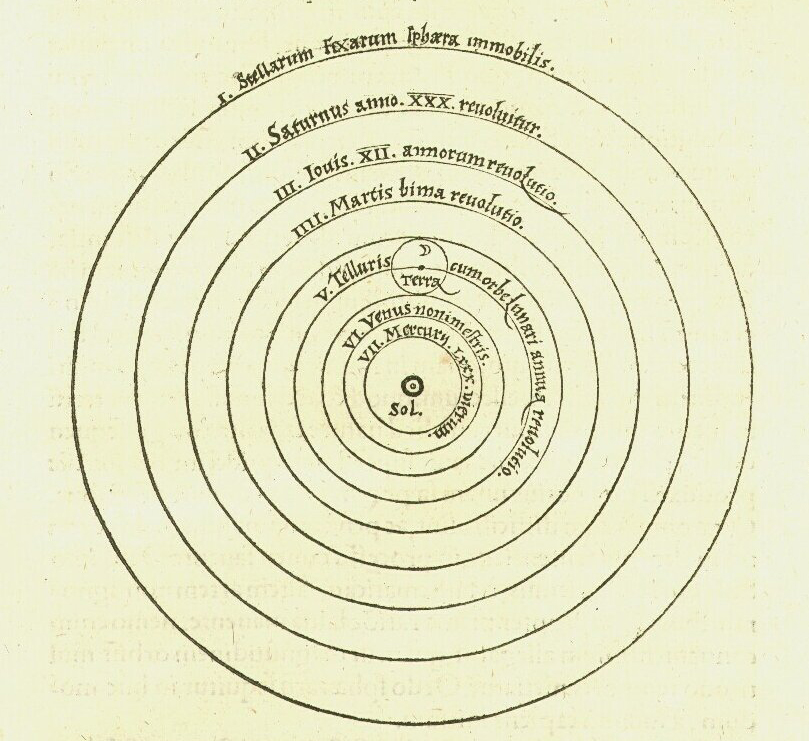
1543 CE · Nuremberg, EuropeCopernicus publishes his heliocentric model
In De revolutionibus orbium coelestium, Copernicus presented a mathematical model in which the Earth revolves around the Sun.
Historical source · Library of Congress USA United States
Centuries XV–XVII CE, approximate range · Hawaiian Island, Hawaiian ArchipelagoRefuge and authority in Hōnaunau
The Hōnaunau compound combines spaces associated with the headquarters with a place of refuge. The walls and platforms allow us to study the material organization of a ritual landscape. Hawaiian tradition retains explanations about people who could seek protection there.
Historical source · National Park Service · Pu ⁇ uhonua or Hōnaunau
Around the 17th century CE, approximate timeline · Efate, Lelepa and Artok, VanuatuRoi Mata's domain links territory, memory and authority
The Mangaas residence, the Fels cave and the burial site in Artok retain testimonies of an authority remembered in local oral history. Communities continue to link these places to their own rules and stories. The landscape allows to consider together archaeological finds and knowledge transmitted between generations.
Historical source · UNESCO · Dominion of Chief Roi Mata
XVI–XIX centuries; reference year · African coasts, Atlantic and AmericaTransatlantic trafficking imposes an African diaspora
Commercial networks and colonial powers forcibly transferred millions of Africans to America. The enslaved persons faced violence, exploitation and separation from their families, and also maintained cultural relations, knowledge and practices in extreme conditions. Travel records allow us to study the magnitude and routes of this story without reducing it to figures.
Historical source · SlaveVoyages · Travel database
Since the end of the 16th century and during the 17th century · San Basilio de Palenque, current ColombiaPalenques build spaces of freedom and memory
People escaping slavery founded communities with their own strategies of defense and coexistence. San Basilio de Palenque preserves a Creole language, forms of organization and musical and funeral traditions linked to that history. The palenques allow us to understand resistance as the creation of bonds, territories and shared knowledge.
Historical fountain · UNESCO · Palenque Cultural Area
1610 CE, publication of the Sidereus Nuncius · Padua and other European observation centresThe telescope changes what can be discussed about the sky
Galileo published observations of the lunar surface, stars not visible to the naked eye and Jupiter satellites made with a telescope. The instrument expanded the field of observable and opened debates on how to interpret images and test results. Observations helped transform astronomy into dialogue and conflict with earlier models.
Historical source · Galileo Museum · Sidereus Nuncius
Beginnings of the 18th century CE · Asante, current GhanaThe Roasting Federation and the Weight of Gold
The consolidation of Asante linked Kumasi to other communities and trade routes. Brass weights for measuring gold dust show how exchange was practiced in the Akan world and how small figures could express proverbs or cultural references.
Historical source · The Met · Akan gold weights
Since the middle of the 18th century; different regional rhythms · Great Britain and later industrial regionsIndustrialization reorganizes energy and work
Mechanization, growing use of coal and expansion of factories transformed production and transport. Many people went on to work under schedules and industrial disciplines, as cities and labour disputes grew. The process also depended on raw materials, markets and colonial relations, and increased human capacity to change the environment.
Historical source · Science Museum · Boulton and Watt steam engine
1 791–1 804 CE · Saint-Domingue, current HaitiThe Haitian Revolution and the Defeat of Colonial Slavery
The insurrection of enslaved people in Saint-Domingue became a revolution that confronted colonial forces and produced Haiti's independence in 1804. Its actors addressed through political and military struggle the scope of the rights proclaimed in the Atlantic world.
Historical source · Office of the History · Haitian Revolution
1796 CE; previous variolisation practices · England and knowledge networks in Asia, Africa and EuropeFrom variolisation to smallpox vaccination
Varialization practices had been circulating in regions of Asia and Africa prior to their spread in Europe. Jenner studied the protection associated with smallpox vaccine in 1796 and developed a different route of immunization. Its subsequent expansion depended on people, materials and organizations, and was accompanied by debates on trust, access and power.
Historical source · WHO · History of smallpox vaccination
c. 1831 CE · Edo, current Tokyo, JapanThe Great Wave circulates as reproducible print
Hokusai integrated Mount Fuji into a composition of boats, water and movement. The carving and printing with wooden blocks required the collaboration of designers, engravers, printers and editors. The circulation of these prints and their reception outside Japan show how a reproducible image can cross social classes and cultural boundaries.
Historical source · The Met · Anatomy of The Great Wave
1839 CE France and Great BritainPhotography opens up new ways to portray and remember
The presentation of the daguerreotype and the works of Talbot made public different photographic procedures. Portraits, landscapes and records of objects began to be produced through light-sensitive surfaces. With the diffusion of photography they changed family memory, scientific documentation and the relationships between image, testimony and art.
Historical source · Library of Congress · Timeline of daguerrotype
Second half of the 19th century; guide date · Cities, laboratories and hospitals of different regionsSanitation and microbiology change public health
Water supply, sewage networks and outbreak study offered new ways to prevent disease. Microorganism research and the development of antisepsy practices transformed laboratories and hospitals. These improvements required political works, resources and decisions, and reached neighbourhoods and towns unevenly.
Historical source · Science Museum · John Snow and cholera
Decade of 1860 A.D. C. · Rapa Nui and ports of PeruSlave expeditions and continued rapanui
Slave expeditions forcibly transferred inhabitants of the island to Peru. Population loss and disease caused a deep crisis. The rapanui community continued to transmit knowledge and practices in conditions transformed by this violence.
Historical source · National Library of Chile · Slave expeditions
April 15, 1874 · Paris, FranceThe Impressionists organize an independent exhibition
In 1874, Monet, Morisot, Degas, Renoir, Pissarro and other artists organized an exhibition in Paris outside the official Salon. The event helped consolidate independent circuits in which artists could present their work and interact with the public. His works explored the light, perception and scenes of contemporary life. Printing, rising sun, by Monet, and The cradle, by Morisot, show the diversity of looks that coexisted in that exhibition. Its relevance in this wheel lies in the transformation of artistic practice and of the institutions that decide which art is shown and recognized.
Historical source · Musée d’Orsay · Paris 1874
1877 CE · New Jersey, USAThe phonograph allows you to listen again to a recording
Thomas Edison's prototype recorded the sound as a groove on a tin foil on a cylinder and could reproduce it. With subsequent improvements, the recordings brought voices and interpretations beyond the place and date of execution. The change opened up new forms of circulation and work for musicians.
Historical source · Smithsonian · Edison’s Talking Machine
End of the 19th century and 20th century; 1882 as reference · Urban networks and later electrified territoriesPower grids transform everyday life
Generators, power plants and distribution systems brought lighting and energy to work spaces and housing. The electrification changed schedules, transportation and the use of appliances, but it required building infrastructure and agreeing standards. Their access remained uneven and linked daily life to growing energy production systems.
Historical source · IEEE History Center · Pearl Street Station
September 1 893 CE · Chicago, United StatesVivekānanda and the international dissemination of Vedānta
Vivekānanda presented philosophical ideas and religious experiences from India to the World Parliament of Religions. His lectures and the institutions that emerged later expanded the international circulation of certain readings of Vedānta in a colonial and transnational context.
Historical source · Vedanta Society of Chicago · Vivekānanda in Chicago
1893 CE, milestone within an international process · Aotearoa New Zealand and movements from other countriesWomen's Voting Turns a Demand into a Political Right
The approval of the women's vote in New Zealand was the result of organization, petitions and debates held by women and their allies. It was a milestone in an international history that had different advances, exclusions and setbacks. Women's movements also expanded demands for education, work, autonomy and public participation.
Historical source · Government of New Zealand · Women's Suffrage
1895 CE · France and subsequent international circuitsCinematographer brings the public together in front of moving images
The Lumière projections were part of the development of a new collective experience. Their operators filmed daily scenes in various countries and organized exhibitions. Cinema would become a way of narrating, documenting and building shared imaginaries, with perspectives and decisions behind each frame.
Historical source · Institut Lumière · The Lumière films
1914–1918 A.D. C. · Europe, Africa, Asia, oceans and imperial networksWorld War I Mobilizes Societies and Empires
The fighting involved European powers and populations of their empires and allies. Soldiers and workers from many regions participated in a sustained war by industry, transportation and propaganda. Human losses, displacement and political crises altered communities and borders and left memories difficult to reconcile.
Historical source · National Army Museum · First World War
c. 1895–1917 CE · New Orleans and New York, United StatesFrom jazz in New Orleans to disco
Jazz was formed in African American communities in New Orleans, where musicians like Buddy Bolden transformed blues, dance rhythms and band tradition. In 1917 a commercial recording of the Original Dixieland Jass Band expanded the genre's audience. The album records a stage of a tradition that was already circulating live.
Historical source · National Park Service · Origins of jazz
1919 CE · Weimar and subsequently Dessau, GermanyThe Bauhaus brings art, trade and design together
Walter Gropius founded a school that articulated artistic teaching and work in workshops. Their debates on materials, housing and industrial production transformed the relationship between everyday objects and design. The subsequent dispersal of their teachers extended those experiences to other places. The images of the Dessau building correspond to a later stage.
Historical source · Bauhaus-Archiv · History of the school
Since 1922, first major campaigns · Mexico CityMexican muralism brings history to public buildings
After the Revolution, artists such as Rivera, Orozco and Siqueiros developed monumental works in public buildings. Workers, indigenous peoples and historical conflicts occupied their walls. The painting thus participated in debates on education, identity and power, and generated exchanges with artistic movements from other countries.
Historical source · INBAL · History of muralism
Decades of 1920–1940 · Harlem, New York, and African American networksThe Harlem Renaissance brings new Black voices to prominence
In the context of the Great Migration, writers, musicians, photographers and visual artists developed new representations of the African-American experience. His works discussed stereotypes, urban life and cultural belonging. Transatlantic exchanges placed these proposals within an international history of modern art.
Historical source · The Met · Harlem Renaissance
1939–1945 CE; war in Asia before 1939 · Europe, Asia, Africa, Pacific and other scenariosWorld War II and the Holocaust Confront Humanity with Mass Destruction
The war combined occupations, bombings, displacements and resource mobilization on a huge scale. Nazi Germany and its collaborators perpetrated the Holocaust through systematic persecution and murder of European Jews, in addition to persecuting and killing other groups. The defeat of the Axis did not close the conflicts of memory, repair and reconstruction that followed.
Historical source · United States Holocaust Memorial Museum · World War II
1928–decade 1940; 1941 as clinical reference · United Kingdom, United States and subsequent international networksPenicillin passes from laboratory to treatment
Fleming's observation of a mold and subsequent investigations by Florey, Chain and their collaborators made it possible to develop penicillin as a treatment. Its large-scale production transformed the care of bacterial infections. Bacterial resistance and unequal access recall that a finding needs research, manufacturing, and responsible use to sustain its benefits.
Historical source · Nobel Prize · 1945 Medical Prize
August 1945 · Hiroshima and Nagasaki, JapanNuclear weapons introduce a threat of planetary reach
The atomic bombings of Hiroshima and Nagasaki caused immediate destruction and suffering that continued among the survivors. The subsequent arms race made the possibility of nuclear destruction a permanent international problem. The testimonies of the Hibakusha and disarmament initiatives place human experiences at the centre of this history.
Historical source · United Nations · Nuclear disarmament
February 1946 · Philadelphia, United StatesENIAC demonstrates the potential of electronic computing
The University of Pennsylvania introduced ENIAC, a general purpose electronic computer that occupied a room. Several programmers configured their operations with cables and switches. Its speed opened up new possibilities for scientific calculation. The work of programming it showed how dependent that ability to translate a problem into instructions depended.
Historical source · Computer History Museum · Computers
December 10, 1948 · Paris and United NationsThe Universal Declaration formulates a shared horizon of rights
People from different countries participated in the elaboration of a text that proclaimed rights for all human beings. The declaration emerged after World War II and coexisted with realities of colonialism and discrimination. Its relevance is both in the common language it offered and in the subsequent struggles to realize those rights.
Historical source · UN · History of the Universal Declaration
1945–Decade 1970; 1960 as reference · Africa and Asia; international scenarioDecolonizations demand sovereignty and self-determination
Political and social movements questioned colonial empires through organization, negotiation and, in many cases, wars. Independencies had different trajectories and did not automatically eliminate inherited inequalities. In 1960, the United Nations declaration on decolonization had expressed the principle of self-determination in a transformed international scenario.
Historical source · UN · History of decolonization
1969 CE · Sea of Quietness, MoonApollo 11 reaches the Moon
Neil Armstrong and Buzz Aldrin walked on the moon and collected samples. Michael Collins remained in lunar orbit.
Historical source · NASA
1969–1983 from ARPANET to TCP/IP · United StatesFrom ARPANET to network
In 1969, the first ARPANET nodes were connected. The packet switching allowed data to be sent in parts over a shared network. In 1983, ARPANET adopted TCP/IP, a set of protocols that enabled different networks to be communicated. Such interoperability was crucial to the development of the Internet.
Historical source · Computer History Museum · Networks and internet
August 15–18, 1969 · Bethel, New York, United StatesWoodstock gathers music, counterculture and a generation
The original Woodstock festival brought together hundreds of thousands of people at Max Yasgur's farm in Bethel. For four days artists such as Richie Havens, Joan Baez, Santana, Janis Joplin and Jimi Hendrix performed. In the context of the Vietnam war and youth mobilizations of the 1960s, the meeting turned music into a collective experience associated with ideals of peace, coexistence and freedom. Rain, saturation of accesses and supply difficulties were also part of the experience. His subsequent film and recordings extended that memory and made him a reference to the great festivals and musical culture of the 20th century.
Historical source · The Museum at Bethel Woods · Woodstock History
November 15, 1971 · Japan and United StatesThe microprocessor takes the computing unit to a chip
Intel commercialized 4004, developed from a commission from Japanese company Busicom for a calculator. A processor manufactured in a single integrated circuit could be reused on different devices by means of programmes. Miniaturization made it feasible to incorporate computing into calculators, machines and, later, personal equipment.
Historical source · Intel · History of 4004
Since 1971 · Papunya, Central AustraliaThe Papunya movement transforms the circulation of Aboriginal art
Papunya artists brought visual repertoires linked to their territories and knowledge to new media and exhibition circuits. The movement changed the public recognition of Australian Aboriginal art. The circulation of these paintings also opened debates about who can show, interpret and market culturally located knowledge.
Historical source · National Gallery of Australia · Aboriginal and Island Art
1973, emblematic date of a tradition in formation · Bronx, New York, United StatesHiphop turns the neighborhood party into a cultural language
Festivals organized in the Bronx gave visibility to techniques of mixing and extending rhythmic passages, with DJ Kool Herc as a central figure. DJ, MC, dance and graffiti were articulated in a culture of collective creation. Its international expansion opened spaces to narrate neighborhood experiences, inequalities and local identities.
Historical source · National Archives · Fiftieth anniversary of hiphop
1976 CE · Hawaii, Tahiti and Central PacificHōkūleʻa and the revival of Pacific wayfinding
The double-hulled canoe Hōkūleʻa sailed from Hawaii to Tahiti guided by Mau Piailug, navigator of Satawal, Micronesia. The crew was guided by stars, waves and other natural signals. The crossing revitalized the teaching of ocean navigation and the links between Pacific communities.
Historical source · Polynesian Voyaging Society · 1976 Journey
1980 CE, global declaration · International health cooperationThe eradication of smallpox demonstrates the extent of cooperation
Vaccination, surveillance and contact search allowed natural smallpox transmission to be interrupted. Local and international teams worked in very different conditions to locate outbreaks and protect communities. The 1980 declaration of eradication culminated in that collective effort and opened a new reference for global public health.
Historical source · WHO · Voluela
1988 CE, establishment of IPCC; previous research · International scientific cooperationClimate change becomes a shared scientific assessment
The establishment of the IPCC organized the international assessment of climate research, its impacts and possible responses. Knowledge is built with observations, models and comparison of results, not with a single measurement. This story connects energy and production with unequal responsibilities and decisions about the lives of future generations.
Historical source · IPCC · History
1989-1993, from the proposal to the opening · CERN, Geneva regionCERN releases World Wide Web software
Tim Berners-Lee proposed linking documents that were on different computers connected to the Internet. The first server and browser made the idea operational. In 1993, CERN put Web software in the public domain, allowing other people to build sites and tools on the same basis. The publication and consultation of information took on a new scale.
Historical source · CERN · The birth of the Web
June 2017 · Research in machine learningThe Transformer architecture changes language processing
The article Attention Is All You Need presented an architecture that uses attention mechanisms to establish relationships between positions of a text. The work was tested in machine translation. The possibility of processing many parallel positions favored training on a larger scale and architecture became a basis for many later generative models.
Historical source · Vaswani et al. · Attention Is All You Need
November 30, 2022 · Public launch on the InternetGenerative artificial intelligence enters everyday conversation
OpenAI presented ChatGPT as a research version open to the public. A conversation interface allowed many people to experiment with text generation, explanation of ideas, and code writing. The dissemination of these tools also made their wrong answers visible and opened questions about verification, authorship and use in education and work.
Historical source · OpenAI · ChatGPT presentation
Explore the other eras